
And he’s been one of the best additions to the Court in its distinguished history. He knows the Constitution like the back of his hand. So, when a decision is made that seems injurious to the nation’s founding document, he responds like a parent trying to protect a child.
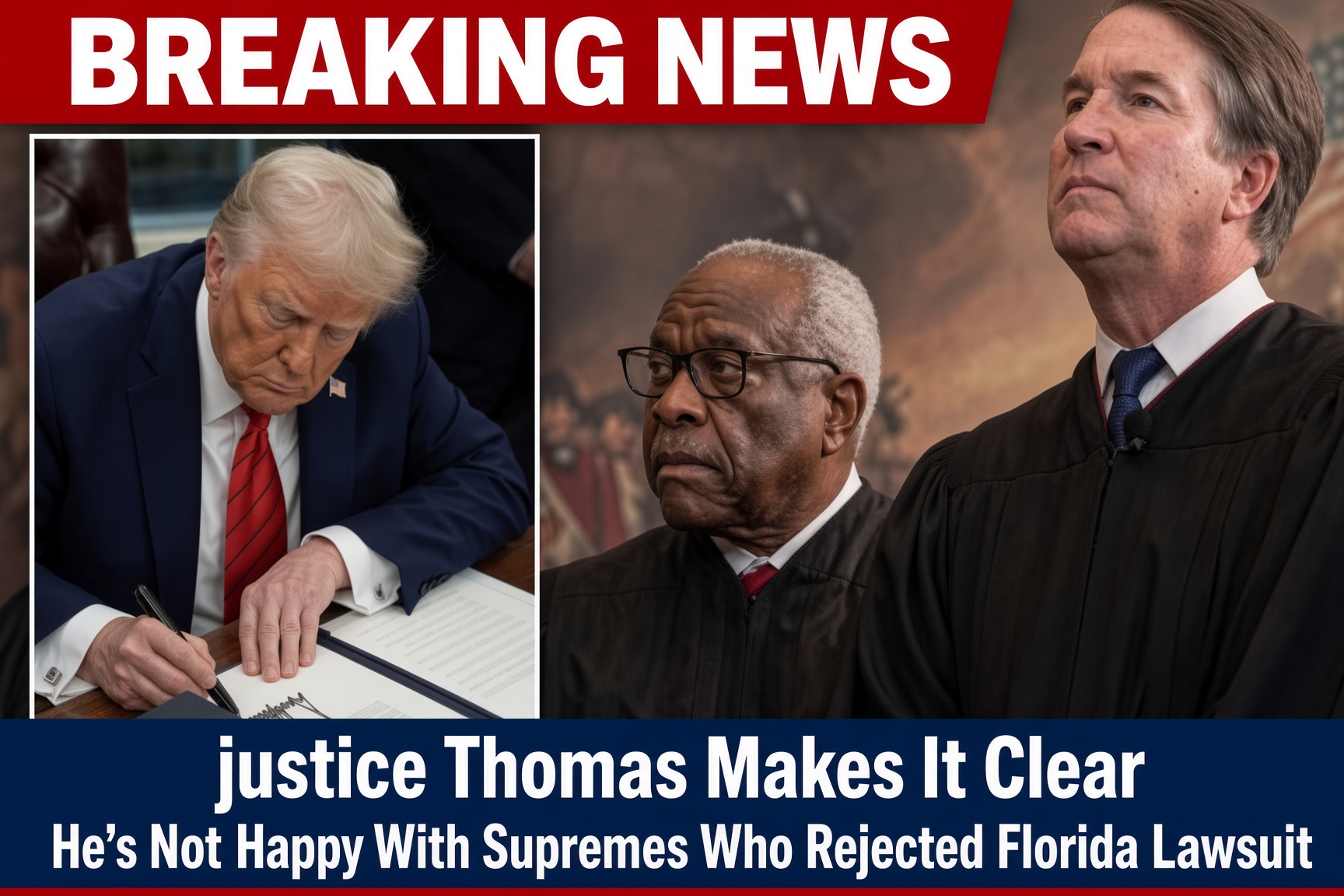
Justice Clarence Thomas took his fellow justices to task on Tuesday after a majority of the Court refused to hear a lawsuit brought by Florida against Washington and California.
Justice Clarence Thomas accused California and Washington of undermining federal immigration and trucking safety standards following a deadly Florida highway crash, criticizing the Supreme Court on Tuesday for refusing to hear a case that Florida had “nowhere else to bring.”
Florida alleged that the two blue states improperly issued commercial driver’s licenses to undocumented immigrants in violation of federal standards requiring English proficiency and lawful immigration status for certain commercial drivers. The state argued that these policies created a public safety threat on American roads.
Thomas, joined by Justice Samuel Alito, said the Supreme Court had a constitutional obligation to hear the dispute because lawsuits between states can only be brought before the nation’s highest court.
“If this Court does not exercise jurisdiction over a controversy between two States, then the complaining State has no judicial forum in which to seek relief,” Thomas wrote.
There is only one court in the country that can hear lawsuits between states: the Supreme Court.
More:
Thomas argued that Florida’s allegations against Washington and California were serious because failing to comply with federal commercial licensing laws can create dangerous road conditions and, he said, has contributed to deadly crashes.
Thomas pointed to a fatal Florida highway crash involving truck driver Harjinder Singh, whom he said “could not read the road signs,” and argued that Florida deserved an opportunity to pursue its claims.
Thomas argued that people who are not legally authorized to be in the country and cannot read road signs in English should not be allowed to drive 80,000-pound tractor-trailers on American highways.
“Federal law and regulations prohibit States from providing commercial driver’s licenses to applicants unless they pass a driver’s test, sufficiently understand the English language, and show appropriate immigration status,” Thomas noted.
Thomas wrote that while the Court may exercise discretion when deciding whether to hear ordinary appeals, disputes between states stand on a different constitutional footing.
“We have no more right to decline the exercise of jurisdiction which is given, than to usurp that which is not given,” Thomas wrote.
Supporters of Thomas’s position argue that he is right that Florida should have a judicial forum in which to pursue its claims concerning the deaths of three residents.
Critics, however, may dispute the characterization that the deaths were “in vain” or that Washington and California “get off scot-free,” since the Court’s refusal to hear the case does not itself establish that either state violated federal law or caused the deaths.
Still, the decision has sparked strong criticism from Thomas and Alito, who believe the Supreme Court has a fundamental role in resolving disputes between states. The disagreement highlights a broader constitutional debate over when the Court must exercise its original jurisdiction and when it may decline to do so.