
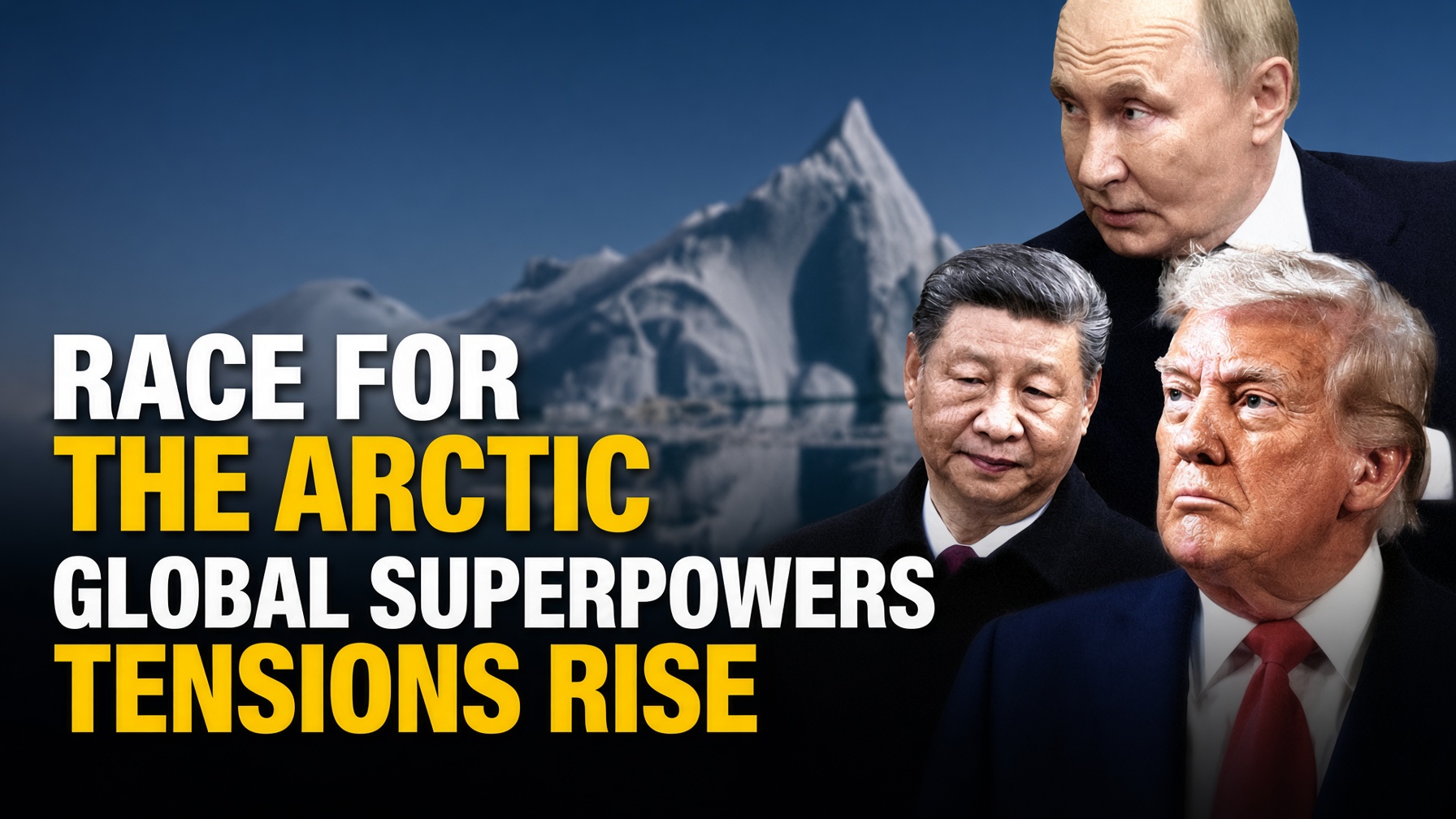
As climate change melts the Arctic ice at record speeds, Russia, the United States, and China are engaged in an unprecedented geopolitical showdown for control of Earth’s last great frontier—and the stakes have never been higher.

The Arctic’s Hidden Treasure Chest
Beneath the Arctic’s icy surface lies one of the planet’s most coveted prize packages: an estimated 30 percent of the world’s undiscovered natural gas reserves and 13 percent of untapped oil deposits. But that’s not all. As global temperatures rise and the Northwest Passage opens up, a new shipping superhighway is emerging—one that could slash shipping times between Asia and Europe by nearly 40 percent.
This isn’t just about resources and trade routes. It’s about who controls the geopolitical center of gravity in the 21st century.
Russia Plants Its Flag
Moscow has been remarkably aggressive in its Arctic strategy. Russia operates more icebreakers than any other nation and has dramatically expanded its military presence in the region, establishing new bases and conducting exercises that would have been unthinkable two decades ago. The Kremlin views the Arctic as a strategic extension of Russian power—a region where it holds geographic advantage.
Russia’s actions speak volumes: the nation has invested billions in Arctic infrastructure, expanded its naval capabilities, and reasserted sovereignty claims over vast portions of the Arctic Ocean. For Putin’s government, this frozen frontier represents both economic opportunity and military leverage.
America’s Belated Awakening
The United States, by contrast, has been playing catch-up. Washington has only two icebreakers in operation, putting it at a severe disadvantage compared to Russia’s fleet of 40-plus vessels. This capability gap has alarmed U.S. military strategists and policymakers who recognize that Arctic dominance is slipping away.
The Pentagon has elevated Arctic security to a critical priority, warning that American interests are being outmaneuvered. Congressional pressure is mounting to invest heavily in icebreaker production and Arctic military readiness—a clear signal that Washington views the region as pivotal to future global security.
China’s Surprise Arctic Ambitions
Perhaps most surprising is China’s aggressive pivot toward Arctic involvement. Despite having no direct Arctic coastline, Beijing has declared itself a “near-Arctic state” and invested heavily in Arctic exploration, resource extraction, and infrastructure projects. Chinese companies are acquiring stakes in Arctic resource development, while the government positions itself as a key player in Arctic governance and commerce.
This move has caught Western nations off guard. China’s strategy represents a fundamental shift in how emerging powers view global resource competition.
Climate Change: The Accelerant
Rising temperatures aren’t just melting ice—they’re accelerating the timeline for Arctic exploitation. Retreating glaciers are opening new areas for resource extraction and navigation. Scientists project that within decades, seasonal Arctic passages could become navigable year-round, fundamentally reshaping global trade patterns.
This environmental reality has created unprecedented urgency among superpowers. Whoever secures dominant positions now will control critical infrastructure, resource access, and strategic chokepoints for generations to come.
What Sparked the Outcry
Environmental advocates, Arctic indigenous communities, and international observers have raised urgent alarms about this intensifying competition. The rush to exploit Arctic resources threatens fragile ecosystems and indigenous populations who have called the region home for millennia. Climate scientists warn that Arctic destabilization could trigger cascading environmental consequences affecting the entire planet.
Meanwhile, geopolitical analysts express grave concerns about military escalation. The Arctic is becoming militarized at an alarming rate, with competing naval exercises, territorial assertions, and weapons deployments creating flashpoints that could ignite international conflict in a region with minimal governance frameworks.
The International Arctic Council, once a forum for peaceful cooperation, is increasingly gridlocked as Cold War tensions resurface. Russian sanctions and NATO expansion have poisoned what was once a collaborative Arctic partnership.
Social Media Reaction
Online communities have erupted with competing narratives. Environmental advocates are sounding the alarm on platforms like Twitter and Reddit, sharing scientific warnings about Arctic ecological collapse and demanding governments prioritize climate action over resource extraction.
Geopolitical analysts and military observers, meanwhile, are debating the strategic implications. Some view Arctic competition as inevitable—a rational response to resource scarcity and shifting power dynamics. Others warn that unchecked military buildup in the region could trigger catastrophic conflict.
Indigenous voices from Arctic nations are gaining volume, with communities demanding meaningful participation in decisions affecting their homelands. Their pleas for environmental protection and indigenous rights have resonated with growing online movements focused on climate justice.
The Energy and Resource Question
At the core of this competition lies a fundamental energy paradox: the world’s superpowers are racing to exploit fossil fuel reserves in the Arctic precisely as the global community pledges to transition away from carbon energy. This contradiction encapsulates the collision between short-term strategic interests and long-term climate imperatives.
Oil companies and energy strategists argue that Arctic resources are essential to meet global energy demand during the transition to renewables. Climate scientists counter that Arctic development locks in decades more carbon emissions and accelerates the very climate destabilization making Arctic resources accessible.
The Bottom Line
The Arctic is transforming from a peripheral, frozen wasteland into the epicenter of 21st-century geopolitical competition. Russia has seized early advantage through military buildup and infrastructure investment. The United States is scrambling to catch up. China is maneuvering for position. And indigenous communities and environmental advocates are desperately seeking a voice in decisions that will shape their future.
What happens in the Arctic will reverberate across global security, economics, and climate futures. The world’s superpowers are making bets that will define the next half-century. The question isn’t whether they’re racing to control the Arctic—they clearly are. The question is whether this competition will trigger conflict, ecological catastrophe, or a new model for international cooperation in managing humanity’s most fragile frontier.
The ice is melting. The stakes are rising. And the clock is ticking.